If you are serious about becoming a pilot in India, one of the first questions you will face is:
How do simulator hours compare with real flying hours in pilot training?
Understanding the difference between flight simulator training and actual aircraft flying is not just theory. It directly impacts your training cost, skill development and career readiness as a professional pilot.
In this guide, we explain everything aspiring pilots in India need to know about simulator and real flying hours, including DGCA requirements, training costs in India, skill advantages and the best training pathway to become a commercial pilot.
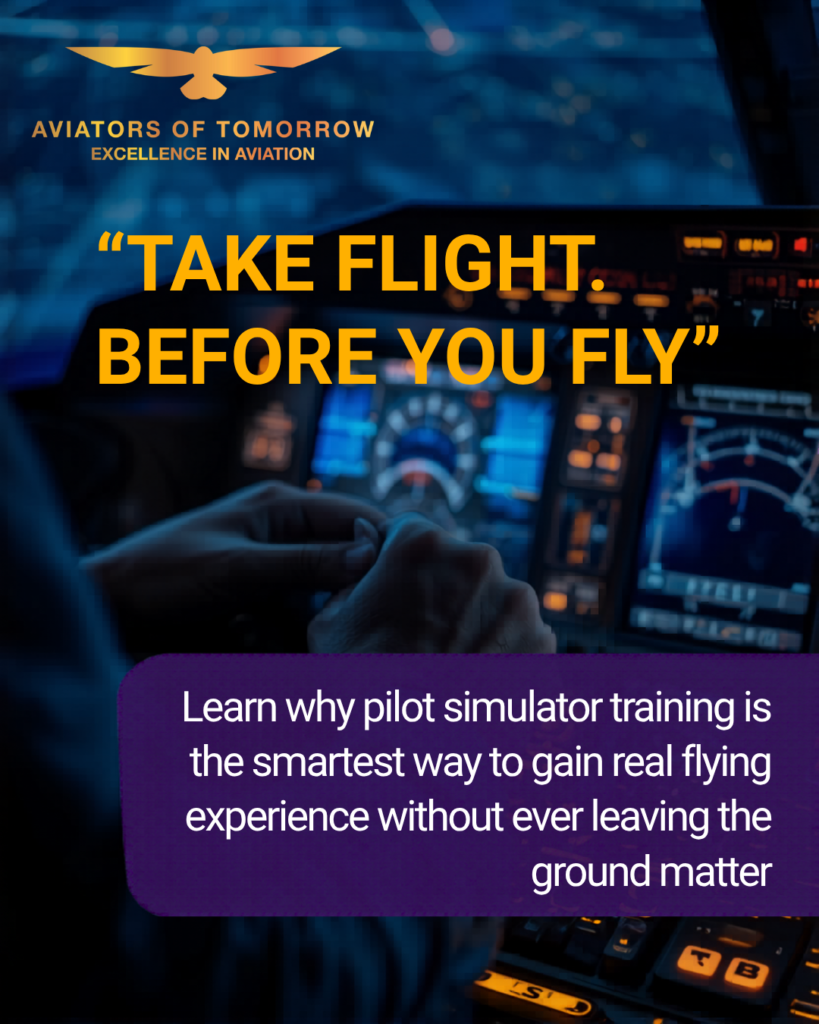
Table of Contents
What Are Flight Simulator Hours?
A flight simulator is a training device designed to replicate the cockpit environment, flight controls, instruments and behaviour of a real aircraft.
Modern simulators used in pilot training include:
• Basic Flight Training Devices (FTD)
• FNPT (Flight Navigation and Procedures Trainer)
• Full Flight Simulators (FFS) used for airline and type rating training.
These systems recreate realistic flying scenarios without leaving the ground.
Why Flight Simulator Training Matters in Pilot Training in India
Simulator training plays a critical role in pilot development because it allows students to:
• Practice emergency procedures safely, such as engine failure or system malfunction
• Build instrument flying skills without expensive aircraft flying time
• Train in bad weather scenarios like thunderstorms, strong crosswinds or low visibility
• Repeat difficult procedures such as ILS approaches and holding patterns multiple times
• Develop multi-crew coordination skills used in airline cockpits
• Train without weather delays or aircraft availability issues
In India, the Directorate General of Civil Aviation (DGCA) allows simulator training as part of pilot training under specific limits.
Simulator and Real Flying Hours: Understanding the Key Differences
Both simulators and real aircraft training serve different but complementary purposes in aviation training.
What Real Flying Hours Provide
Actual aircraft flying remains the foundation of pilot training.
1. Real Physical Sensation
When flying a real aircraft, pilots experience:
• Turbulence
• Aircraft movement
• Changes in wind and lift
• True spatial awareness
This physical feedback cannot be fully replicated by simulators.
2. Real-World Decision Making
Flying in real conditions forces pilots to make genuine decisions, such as:
• Weather diversion
• Traffic management
• Unexpected technical issues
• Fuel planning
These situations build Aeronautical Decision Making (ADM) skills.
3. Navigation and Airspace Awareness
During cross-country flights in India, student pilots learn to manage:
• Navigation between airports
• Controlled and uncontrolled airspace
• Radio navigation aids
• Flight planning and fuel management
These real-world experiences are critical for pilot development.
4. ATC Communication Skills
Interacting with real Air Traffic Control (ATC) develops confidence and communication discipline.
While simulators can simulate ATC, the pressure and timing of real radio communication is very different.
What Flight Simulators Offer
Simulators provide several training advantages that are difficult or impossible to achieve in real aircraft.
Scenario Repeatability
Students can practice the same approach or emergency multiple times during a single session.
Fault Simulation
Instructors can simulate serious failures like:
• Dual engine failure
• Electrical failure
• Hydraulic system malfunction
These would be unsafe to practice in a real aircraft.
Zero Risk Training
Dangerous situations can be safely practised without endangering students or instructors.
Cost Efficiency
Simulator training is usually much cheaper than real aircraft flying, especially during early training phases.
Weather Independence
Simulator training continues regardless of:
• Monsoon weather
• Low visibility
• Strong winds
• Airport congestion
This ensures faster and more consistent training progress.
Simulators teach you how to fly but real flying teaches you how to be a pilot.
Stand a chance to win 100% scholarship & start training with India’s trusted aviation institute. Apply & Check Eligibility.
Apply Now!DGCA Pilot Training Requirements in India
Understanding DGCA requirements is important for planning pilot training in India.
Private Pilot Licence (PPL)
For a Private Pilot Licence, DGCA requires:
Minimum 40–60 total flying hours, including:
• Dual instruction flying
• Solo flight time
• Cross-country flying
Some simulator hours may be allowed depending on the approved training device, but the majority must be real aircraft flying.
Commercial Pilot Licence (CPL)
For a Commercial Pilot Licence, DGCA requires:
Minimum 200 total flying hours
This includes:
• Solo flying
• Cross-country navigation flights
• Instrument flying
• Night flying
• Check rides
Simulator training can contribute towards instrument training requirements, but most hours must still be completed in an actual aircraft.
Type Rating Training
After CPL, pilots undergo type rating training to fly airline aircraft, such as:
• Airbus A320
• Boeing 737
Type rating is conducted almost entirely in Full Flight Simulators (Level C or D) approved by DGCA.
Cost Comparison: Simulator and Real Flying in India
Pilot training cost is one of the biggest factors students must consider.
Approximate training costs in India:
| Training Type | Cost per Hour (India) |
| Single-engine training aircraft (Cessna 152 / 172 / Piper) | ₹10,000 – ₹18,000 |
| Multi-engine aircraft | ₹35,000 – ₹55,000 |
| Basic flight simulator | ₹4,000 – ₹8,000 |
| Full Flight Simulator (airline level) | ₹40,000 – ₹1,00,000 |
Key Insight
Basic simulators are much cheaper than real flying, making them ideal for:
• Instrument practice
• Emergency procedures
• Procedural training
However, high-end airline simulators are expensive due to their advanced technology and certification requirements.
Why Real Flying Is Essential for Airmanship
Despite advances in simulation technology, real flying remains the core of pilot training.
Airmanship includes:
• Situational awareness
• Discipline and professionalism
• Judgment under pressure
• Safety management
These qualities develop primarily through real flight experience.
Weather Experience
Indian pilots must learn to deal with:
• Monsoon weather
• Thermal turbulence
• High-temperature conditions
• Variable visibility
Understanding weather behaviour requires real exposure during flight operations.
Building Confidence
Completing challenging flights builds genuine confidence, such as:
• Cross-country navigation
• Instrument approaches in low visibility
• Busy airport operations
Simulators help practice procedures, but confidence is built in the sky.
The Best Training Approach: Combining Both
The most effective pilot training programs use both simulators and real aircraft strategically.
Phase 1: Basic Aircraft Handling
Students begin with real flying to learn:
• Take-off and landing
• Turns and climbs
• Stall recovery
• Circuit training
Phase 2: Instrument Flying
Simulators become extremely useful for learning:
• Instrument scan techniques
• Holding patterns
• Instrument approaches
Phase 3: Emergency Procedures
Advanced simulators allow safe training for:
• Engine failures
• System malfunctions
• Rejected takeoffs
• Severe weather scenarios
Phase 4: Airline Training
Airline pilots regularly train in simulators for:
• Recurrent training
• Emergency drills
• Operational proficiency checks
Common Myths About Simulators and Real Flying
Myth 1: Simulator hours are equal to real flying hours
Not entirely. Simulators are excellent training tools, but cannot fully replicate real flight conditions.
Myth 2: Most pilot training can be done in simulators
DGCA regulations require minimum real flying hours, so simulator training cannot replace aircraft flying.
Myth 3: Modern simulators make real flying unnecessary
Even the most advanced simulators cannot replace real-world flying experience.
Myth 4: Simulators are only for airline pilots
Even beginner pilots training for PPL or CPL benefit greatly from simulator sessions.
You may read our blog “Pilot Training Timeline: Complete Guide From First Flight to Job“
Conclusion
The debate between simulator and real flying hours isn’t about choosing one over the other it’s about balance.
Simulators provide safe emergency training, cost-effective practice and repetition of complex procedures. Real flying builds true aircraft handling, decision making, weather experience and confidence.
In India, the Directorate General of Civil Aviation (DGCA) ensures this balance by setting limits on simulator credits and mandating real flying hours for licences.
The best pilot training combines both because while technology supports learning, real skill is built in the sky.
Start your pilot training journey today with the right mix of simulator and real flying experience.
Stand a chance to win 100% scholarship & start training with India’s trusted aviation institute. Apply & Check Eligibility.
Apply Now!