For many students, the dream of becoming a pilot begins with looking up at the sky and imagining themselves in the cockpit of an aircraft. While that dream feels exciting, the path to becoming a pilot is structured, regulated and step-by-step. The Student Pilot Licence (SPL) is the very first official step in this journey.
Before you fly solo, before you log flight hours and long before you apply for a Commercial Pilot Licence (CPL), you must first obtain a SPL. This licence is the foundation of your aviation career. Without it, you cannot legally start flight training.
This guide is written especially for students who are new to aviation. Every section explains why something is required, not just what is required. By the end of this blog, you will fully understand what a Student Pilot Licence is, who can apply, how to apply, what you will study and how it fits into your long-term pilot career.
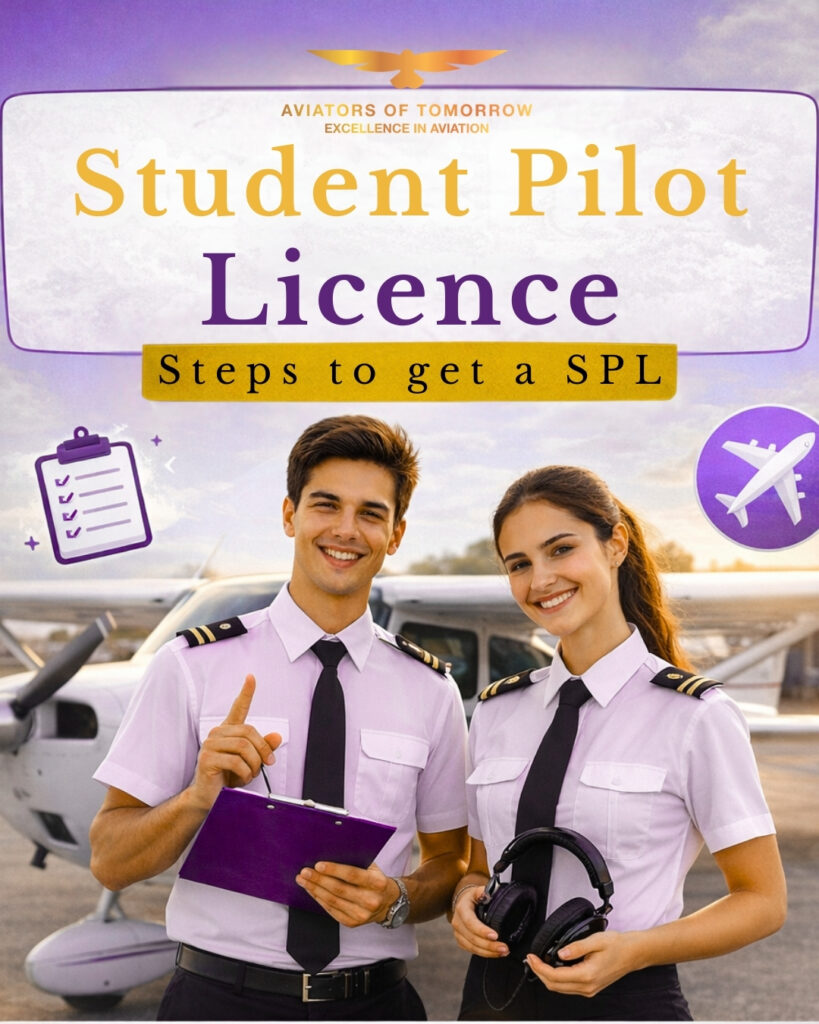
Table of Contents
What Is a Student Pilot Licence?
A Student Pilot Licence (SPL) is the first aviation licence issued to a person who wants to learn how to fly an aircraft. It is granted before any advanced pilot licence and allows a student to undergo flight training under the supervision of a certified flight instructor.
In simple words, the SPL is permission from aviation authorities that says:
“You are fit, eligible and allowed to start learning how to fly an aircraft.”
This licence does not allow you to fly passengers or earn money. It only allows you to train, learn and gradually build skills as a pilot.
Why the Student Pilot Licence Is So Important
Many students underestimate the importance of the Student Pilot Licence, but in reality, it plays a very critical role.
Here’s why the Student Pilot Licence is essential:
- It is legally mandatory to start flight training
- It proves your medical and educational eligibility
- It allows you to log training flight hours
- It is required before solo flying
- It forms the base for PPL, CPL and ATPL
Every airline captain, instructor and military pilot once started with a Student Pilot Licence. No one skips this step.
Who Should Apply for a Student Pilot Licence?
You should apply for a SPL if:
- You want to become a commercial airline pilot
- You want to become a private pilot
- You are serious about aviation as a career
- You want to experience real flight training
Students after Class 12, college students and even working professionals can apply for a Student Pilot Licence, as long as they meet the eligibility criteria.
Eligibility Criteria for Student Pilot Licence (Explained Simply)
Understanding eligibility helps avoid confusion and delays. Let’s break it down clearly.
1. Age Requirement
- Minimum age: 17 years
This ensures that the student has basic maturity and responsibility before handling an aircraft.
2. Educational Qualification
- Passed 10+2 (Class 12)
- Physics and Mathematics are compulsory subjects
Physics helps you understand flight principles, while Mathematics supports navigation and calculations. These subjects are important for safe flying.
3. Medical Fitness Requirement
Medical fitness is one of the most important parts of the Student Pilot Licence.
You must pass a Class 2 Medical Examination conducted by DGCA-approved doctors under Directorate General of Civil Aviation guidelines.
Medical checks include:
- Eyesight (vision clarity and colour vision)
- Hearing ability
- Blood pressure
- Heart and general health
- Mental fitness
Without medical clearance, your SPL cannot be issued.
Understanding the Medical Requirement in Detail
Many students worry about medical fitness, but most healthy individuals clear it easily.
Key points:
- Minor spectacles are usually allowed
- Good overall health is required
- Temporary issues (like low haemoglobin) can often be corrected
It’s always recommended to complete medical tests before investing heavily in flight training.
Subjects You Study for Student Pilot Licence
To receive a Student Pilot Licence, students must clear a basic written or oral examination conducted by their flying club or authority.
The subjects are introductory, not advanced.
1. Air Regulations
You learn:
- Basic aviation rules
- Responsibilities of pilots
- Safety regulations
2. Aviation Meteorology (Basic Level)
You learn:
- Weather effects on flying
- Wind, clouds and visibility
- Why weather is important for safety
3. Aircraft General Knowledge
You learn:
- Basic parts of an aircraft
- How engines work
- Controls and instruments
4. Principles of Flight
You learn:
- How lift is generated
- Why aircraft fly
- Basics of aerodynamics
These subjects help build understanding before entering the cockpit.
Documents Required for SPL
Preparing documents correctly saves time and stress.
You usually need:
- Proof of age (Birth Certificate / Passport / Aadhaar)
- Class 10 and 12 mark sheets
- Class 2 and class 1 medical certificate
- Passport-size photographs
- Identity proof
- Application form from flying school
Always double-check spellings and dates to avoid rejection or delays.
Want Help Starting Your Pilot Journey?
If becoming a pilot is your dream, our aviation experts can guide you on eligibility, training and available scholarship opportunities.
👉 Apply for Pilot Scholarship
Stand a chance to win 100% scholarship & start training with India’s trusted aviation institute. Apply & Check Eligibility.
Apply Now!Step-by-Step Application Process for Student Pilot Licence
Here is the process explained simply:
Step 1: Choose a DGCA-Approved Flying School
Select a reputed flying school where you plan to train.
Step 2: Complete Class 2 Medical
Get medically cleared before proceeding further.
Step 3: Submit Documents
Submit all documents to the flying school.
Step 4: Appear for SPL Test
Clear the oral or written test conducted by the flying club.
Step 5: Licence Issuance
Once approved, you receive your SPL.
After this, flight training officially begins.
Validity of Student Pilot Licence
The Student Pilot Licence is generally valid for:
- 5 years, subject to medical validity
If your medical expires, your licence becomes inactive until renewed.
What Flying Is Like After Getting SPL
Once you receive your SPL, your real learning begins.
You will:
- Sit in the cockpit with an instructor
- Learn checklists and procedures
- Practice takeoffs and landings
- Understand radio communication
- Build confidence gradually
Initially, you will not fly alone. Solo flying comes later, only after your instructor is confident in your skills.
What You Cannot Do with a Student Pilot Licence
It’s important to understand limitations:
- You cannot carry passengers
- You cannot earn money by flying
- You cannot fly without instructor approval
- You cannot fly commercial aircraft
The SPL is for learning only.
Common Mistakes Students Make
Avoid these mistakes:
- Ignoring medical fitness early
- Choosing flying schools without research
- Underestimating theory subjects
- Rushing without understanding basics
Taking the SPL stage seriously makes future licences easier.
How Student Pilot Licence Builds Strong Pilot Habits
This stage teaches:
- Discipline and responsibility
- Safety-first mindset
- Respect for procedures
- Professional behaviour
Pilots who build strong habits during SPL training perform better throughout their careers.
What Comes After Student Pilot Licence?
After SPL, students usually move toward:
- Private Pilot Licence (PPL) or
- Commercial Pilot Licence (CPL)
Your SPL is the stepping stone to these advanced licences.
You may also read our blog “Commercial Pilot Licence Training: Complete Guide“
Final Thoughts on Student Pilot Licence
The Student Pilot Licence is not just a formality, it is the beginning of your transformation from a dreamer into a pilot-in-training. Every hour you spend learning during this phase shapes your future skills, safety awareness and confidence.
If you are serious about aviation, respect this stage, learn patiently and focus on understanding rather than rushing. The sky does not reward shortcuts, it rewards preparation.
✈️ Every pilot’s journey begins with a SPL. Your journey can begin today.
Ready to Become a Pilot?
Take the first step toward your aviation career. Apply for our pilot training scholarship and get expert guidance for your journey from SPL to CPL.
Stand a chance to win 100% scholarship & start training with India’s trusted aviation institute. Apply & Check Eligibility.
Apply Now!