If you are planning a career in aviation, especially as a commercial pilot (CPL), then you must understand the RTR exam. Most students hear about RTR early in their pilot journey, but many do not fully know what it includes, why it is important and how to prepare for it confidently.
RTR Exam is not difficult, but it can feel confusing at first because students often do not know what to expect in the written exam and the viva. Once you understand the structure and start practicing in the right way, the RTR exam becomes much easier to manage.
There is also a major update every aviation student must remember:
RTR exam is now officially conducted by DGCA (Directorate General of Civil Aviation).
Earlier, the RTR exam was conducted by WPC (Wireless Planning and Coordination Wing).
In this blog, you will get a complete and simple explanation of RTR, including eligibility, exam pattern, syllabus, preparation strategy and common mistakes students should avoid.
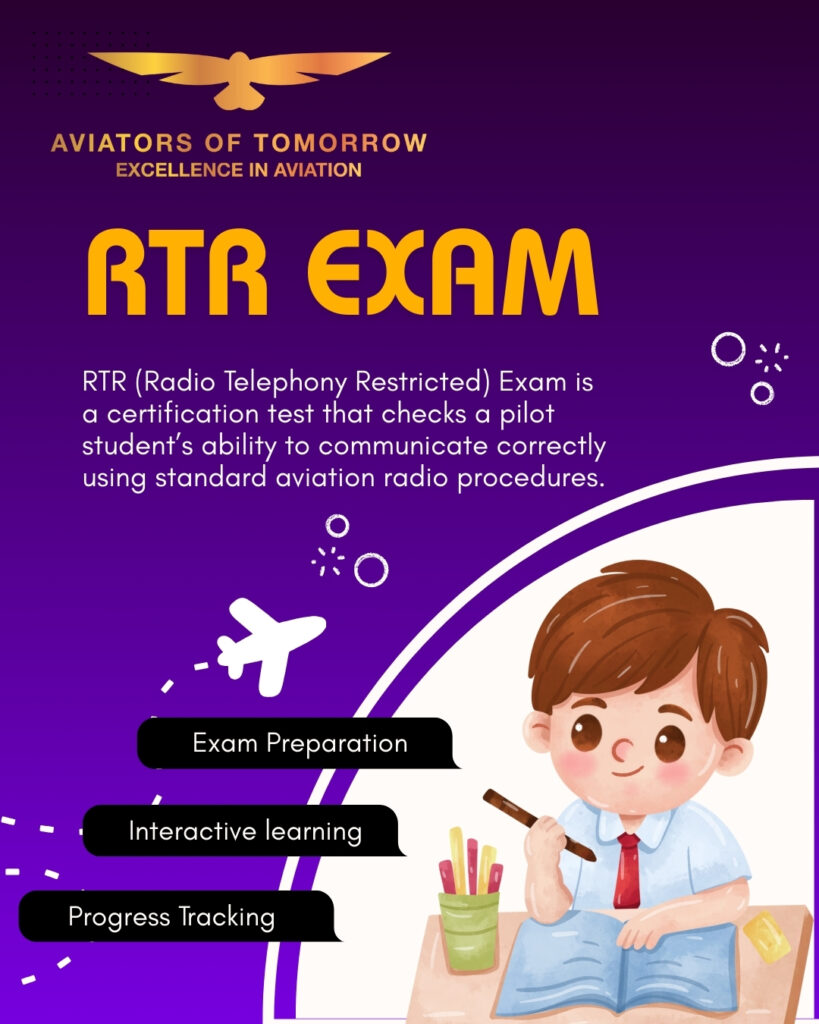
Table of Contents
What is RTR?
RTR stands for Radio Telephony Restricted. It is a certification exam that tests a student’s ability to communicate correctly using aviation radio communication procedures.
In aviation, pilots do not communicate like normal conversations. Aviation communication follows a strict and internationally accepted system called RT communication (Radio Telephony communication). This communication happens between pilots and ATC, between aircraft and control towers and between cockpit crews and ground stations.
The RTR exam checks whether you can understand aviation radio communication, speak correctly using standard phraseology, follow radio rules and discipline and communicate clearly in real aviation situations.
In simple words, RTR is the exam that makes you communication-ready for aviation.
Full Form of RTR
The full form of RTR is Radio Telephony Restricted.
This is why it is commonly called the RTR exam, RTR license, or radio telephony license.
Why is RTR Important in Aviation?
Aviation is not only about flying an aircraft. It is also about communication, coordination and safety. Clear and correct communication is required on every flight because pilots must follow ATC instructions precisely.
Even a small mistake in communication can create serious confusion, such as:
- Wrong altitude clearance
- Wrong runway instruction
- Incorrect route confirmation
- Delays and misunderstandings in emergencies
Aviation communication is designed to be short, clear and standardized so that pilots and controllers can understand each other easily, even under pressure.
RTR is important because it helps you communicate clearly with ATC, understand clearances correctly, use proper aviation phraseology, stay confident in high-pressure situations and handle emergency communication professionally.
For pilot students, RTR is not only an exam. It is a real-life skill that you will use throughout your career.
RTR is Now Officially Conducted by DGCA
One of the most important updates for aviation students is that RTR is now officially conducted by DGCA (Directorate General of Civil Aviation).
DGCA is the main aviation regulatory authority in India. When DGCA conducts RTR, it means the exam and certification are now managed directly under aviation standards and pilot communication requirements.
This change matters because it makes the RTR process more aviation-focused and aligned with professional pilot training.
Earlier RTR Was Conducted by WPC
Before DGCA, the RTR exam was conducted by WPC (Wireless Planning and Coordination Wing).
WPC is a government body responsible for wireless communication regulations, radio frequency management and licensing related to radio operations. Since aviation communication depends on radio frequencies, WPC earlier conducted RTR.
Now, because RTR is mainly required for aviation professionals, especially pilots, it is officially conducted by DGCA.
To summarize this clearly:
Earlier: RTR was conducted by WPC
Now: RTR is officially conducted by DGCA
Who Needs RTR?
RTR is mainly required for students who want to fly professionally. It is especially important for CPL students and those planning to build an airline pilot career.
RTR is needed for:
- CPL students
- Future airline pilots
- Aviation professionals involved in radio telephony communication
If you want to become a professional pilot, RTR becomes a key step in your aviation journey.
Do You Also Want to Become a Pilot?
If you dream of flying commercial aircraft and building a career in aviation, the right guidance can make your journey easier.
👉 Apply for Pilot Scholarship
Stand a chance to win 100% scholarship & start training with India’s trusted aviation institute. Apply & Check Eligibility.
Apply Now!Eligibility Criteria for RTR Exam
The eligibility criteria for RTR are simple and student-friendly.
Most students preparing for RTR meet these basic requirements:
- Minimum education: 10+2 Mandatory
- Basic English understanding
- Ability to speak clearly and confidently
It is important to understand that RTR does not require advanced English. It requires clear, correct and professional aviation communication.
RTR Exam Pattern (Written and Viva)
The RTR exam generally includes two parts:
- RTR Written Exam
- RTR Viva or Oral Exam
Both parts are important and most students perform best when they prepare for both together.
RTR Written Exam: What to Expect
The written exam checks your theoretical understanding of aviation radio communication rules and procedures. It usually covers topics such as:
- Radio telephony rules and procedures
- Aviation communication basics
- Emergency signals and protocols
- Transmission discipline
- Distress, urgency and safety signals
- Basic radio operation knowledge
This part becomes easier when you focus on understanding concepts rather than memorizing everything.
RTR Viva or Oral Exam: What Happens in It?
The viva is the part where many students feel nervous, but it becomes manageable with regular practice.
In the viva, the examiner checks:
- Clarity of speech
- Confidence and calmness
- Correct usage of phraseology
- Ability to respond accurately to ATC instructions
In the viva, you may be asked to:
- Make standard pilot calls
- Respond to ATC instructions
- Read back clearances correctly
- Handle emergency communication situations
A common mistake students make is speaking too fast. In RTR, accuracy is more important than speed. Speaking slowly and clearly improves your performance and reduces errors.
RTR Syllabus (Easy Breakdown for Students)
The RTR syllabus is based on real aviation communication. The major areas covered include:
- RT procedures and phraseology
- Communication rules and discipline
- Emergency communication procedures
- Distress, urgency and safety signals
- Basic knowledge of radio equipment
- Pilot and ATC communication flow
The syllabus is designed to make sure you can communicate safely and professionally during real flights.
How to Prepare for RTR Exam (Step-by-Step)
The best way to prepare for RTR is to follow a structured approach. Many students fail or struggle because they only memorize without practicing communication.
Here is a simple step-by-step preparation plan:
Step 1: Understand the Basics
Start by understanding what aviation phraseology means and why it is used. Learn the purpose of standard communication and the importance of correct readback.
Step 2: Practice Speaking Daily
Daily speaking practice improves confidence faster than anything else. Even 15 to 20 minutes of practice every day can make a big difference.
Step 3: Focus on Standard Calls
Practice common communication situations such as taxi requests, takeoff clearance, climb and descent instructions, landing clearance and basic emergency calls.
Step 4: Take Mock Viva Practice
Mock viva practice helps you understand how the real viva feels. It also improves fluency, pronunciation and confidence.
Step 5: Revise Written Concepts Regularly
Revise important rules, procedures and emergency communication topics. Regular revision helps you remember concepts easily.
Best Tips to Clear RTR in First Attempt
If you want to clear RTR in the first attempt, focus on smart preparation and consistency.
Here are practical tips that work for most students:
- Stay calm during the viva
- Speak slowly and clearly
- Focus on correct readback
- Practice daily, even if the practice time is short
- Do not panic if you make a small mistake
- Improve your listening skills along with speaking skills
Clearing RTR in the first attempt saves time and keeps your pilot training on track.
Common Mistakes Students Make in RTR
Many students struggle in RTR because of avoidable mistakes. Some of the most common mistakes are:
- Speaking too fast
- Memorizing without understanding
- Not practicing viva calls regularly
- Losing confidence under pressure
- Confusing the correct order of readback
Avoiding these mistakes can improve your performance significantly.
You may also read our blog “Complete Guide to Pilot Training in 2026“
Final Words
RTR is not just an exam. It is a communication skill that prepares you for real aviation operations.
Now that RTR is officially conducted by DGCA, it has become even more important for aviation students aiming for professional pilot careers. If you practice consistently and follow a structured plan, you can clear RTR smoothly and gain confidence in aviation communication.
Start early, practice daily and treat RTR as a real-life pilot skill, not just a test.
Ready to Start Your Pilot Journey?
From DGCA exams to flight training, every pilot begins with the right plan and preparation.
👉 Fill the Pilot Scholarship Form
Stand a chance to win 100% scholarship & start training with India’s trusted aviation institute. Apply & Check Eligibility.
Apply Now!