The future of flying is no longer a distant dream painted in science fiction; it is unfolding right now, reshaping the way aircraft are designed, piloted and managed across the globe. From intelligent autopilot systems to fully autonomous drones, artificial intelligence is quietly revolutionising the aviation industry in ways that are both thrilling and thought-provoking. At AOT Aviation of Tomorrow, we believe in keeping you ahead of every curve, every altitude and every innovation that defines modern aviation. So buckle up, because this deep dive into AI and automation in the cockpit is one journey you will not want to miss.
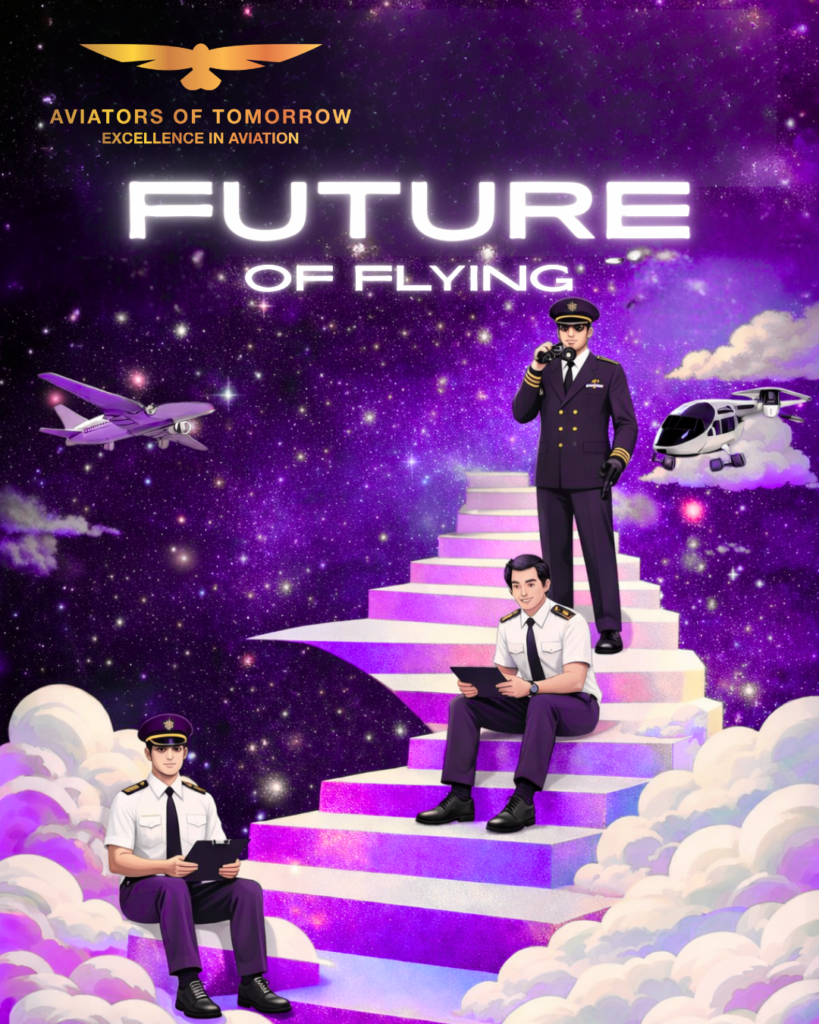
Table of Contents
The Future of Flying: How AI Is Transforming Aviation
For decades, aviation has been at the forefront of technological advancement. Yet the integration of artificial intelligence into cockpit systems marks perhaps the most significant leap in the history of flight. Today’s aircraft are no longer simply machines controlled by human hands; they are intelligent platforms capable of processing thousands of data points per second, making split-second decisions and learning from every flight they undertake.
Modern commercial aircraft already rely heavily on automated flight systems. Features such as auto throttle, terrain awareness, traffic collision avoidance and automatic landing systems have been part of aviation for years. However, what is emerging now goes far beyond these foundational tools. Next-generation AI in aviation is capable of predictive decision-making, real-time hazard assessment, adaptive route optimisation, and even emotional monitoring of flight crew to detect signs of fatigue or stress.
The cockpit of tomorrow is not just a place where pilots sit; it is a dynamic, intelligent workspace where humans and machines collaborate seamlessly to ensure the safest and most efficient flight possible.
Understanding Cockpit Automation: From Autopilot to Artificial Intelligence
To appreciate the future of flying, it helps to understand where cockpit automation began. Early autopilot systems, introduced in the early 20th century, were simple mechanical devices designed to maintain an aircraft’s heading and altitude. Over the decades, these evolved into highly sophisticated fly-by-wire systems in which computers interpret pilot inputs and make micro-adjustments to keep the aircraft stable.
Today, the line between pilot and machine has become increasingly blurred. Modern flight management systems handle everything from departure planning to final approach, crunching enormous amounts of data to optimise fuel efficiency, speed and routing. Pilots, rather than physically flying the aircraft for most of the journey, act as supervisors monitoring systems, responding to anomalies and taking manual control when necessary.
Artificial intelligence is now pushing this model even further. Machine learning algorithms can analyse historical flight data to predict mechanical failures before they occur. Natural language processing allows AI systems to communicate with air traffic control more efficiently. Computer vision technology can monitor runway conditions, weather patterns and surrounding air traffic with a precision that surpasses human capability.
The result is a cockpit environment that is smarter, safer and more responsive than anything that has come before.
AI-Powered Predictive Maintenance: Keeping Aircraft Safer Than Ever
Artificial intelligence is playing a major role in shaping the future of flying by improving safety, efficiency and decision-making in modern aviation.
Traditional maintenance schedules are time based aircraft are serviced after a certain number of flight hours or cycles, regardless of their actual condition. This approach, while effective, can be both wasteful and potentially dangerous if a component begins to fail between scheduled checks.
AI-driven predictive maintenance systems change this entirely. By continuously monitoring sensor data from thousands of components, engines, hydraulics, avionics, and landing gear, these systems can detect subtle anomalies that might indicate an impending failure. Alerts are generated long before a problem becomes critical, allowing ground crews to address issues proactively.
For airlines, this means fewer unexpected delays and cancellations. For passengers, it means a safer and more reliable journey. And for the wider aviation industry, it represents a fundamental shift from reactive to proactive safety management, a shift that has the potential to save lives.
The Rise of Single-Pilot and Autonomous Aircraft Operations
Perhaps the most controversial and fascinating development in the future of flying is the move towards single-pilot and eventually fully autonomous commercial aircraft operations. For generations, commercial aviation has operated on the two-pilot model, with a captain and first officer sharing responsibilities across every phase of flight. This redundancy has been central to aviation’s remarkable safety record.
However, several forces are now challenging this model. A global pilot shortage, driven by an ageing workforce and the enormous cost of pilot training, is putting pressure on airlines to find alternative solutions. At the same time, AI technology has advanced to the point where many industry experts believe a single pilot, supported by advanced automation, could safely manage a commercial flight.
Extended Minimum Crew Operations, commonly known as eMCO, is already being explored by regulatory bodies, including the European Union Aviation Safety Agency. Under this framework, one pilot would be permitted to rest during the cruise phase while the aircraft is managed by AI systems, with the second pilot remaining available in the flight deck.
Full autonomy where no human pilot is present at all remains a more distant prospect for commercial aviation, though it is already a reality in cargo operations and military applications. Companies such as Reliable Robotics and Xwing are actively testing autonomous cargo aircraft and the data being gathered from these operations is laying the groundwork for broader adoption.
The question is not whether autonomous commercial flight will happen, but when and how the regulatory and public trust challenges will be navigated along the way.
AI and Air Traffic Management: Clearing the Skies
The cockpit is only one piece of the aviation puzzle. Beyond the aircraft itself, AI is playing an increasingly important role in air traffic management, the complex system that keeps thousands of flights safely separated across the globe at any given moment.
Current air traffic control systems, while highly effective, are largely dependent on human controllers interpreting radar data and issuing instructions to pilots. This human-centric model has served aviation well, but it is approaching its limits as global air traffic continues to grow.
AI-powered air traffic management systems are being developed to handle this increasing complexity. These systems can process real-time data from thousands of aircraft simultaneously, optimise routing to reduce congestion and emissions and anticipate conflicts far earlier than human controllers are able to. In essence, AI can see the entire chess board at once, making moves that individual human controllers, focused on their specific sectors, cannot.
Programmes such as the Single European Sky initiative and NASA’s Airspace Technology Demonstration project are exploring how AI can be integrated into existing air traffic control infrastructure. The goal is not to replace human controllers entirely but to augment their capabilities, giving them better tools to manage an ever more complex and congested airspace.
AI-powered air traffic systems will play a major role in managing the future of flying as global air travel continues to expand.
Pilot Training and the Future of Flying in the Age of AI
As the technology within aircraft evolves, so too must the way pilots are trained. The future of flying demands a new kind of aviator, one who is not only a skilled stick and rudder pilot but also a sophisticated system manager, capable of working effectively alongside advanced AI and automation.
Modern flight training is already incorporating simulation technologies that were unimaginable a generation ago. Full-flight simulators can recreate virtually any scenario with extraordinary fidelity, from routine operations to rare emergency situations that a pilot might never encounter in an entire career. AI is now being used to personalise these training programmes, adapting difficulty levels in real time based on a trainee’s performance and identifying specific areas where additional focus is needed.
Beyond technical skills, the future pilot curriculum must address the human factors challenges that come with high levels of automation. Research has consistently shown that over-reliance on automated systems can erode manual flying skills, a phenomenon known as automation complacency. Ensuring that pilots maintain the ability to take effective manual control in an emergency, even after extended periods of automated flight, is one of the central challenges facing aviation training organisations today.
Equally important is training pilots to understand the logic and limitations of the AI systems they work with. A pilot who understands why an automated system is behaving in a particular way is far better equipped to manage unexpected situations than one who simply accepts the machine’s outputs without question.
Sustainable Aviation and the Future of Flying
The future of flying is not only about speed and safety, it is also about sustainability. Aviation currently accounts for approximately 2.5% of global carbon dioxide emissions, a figure that the industry is under increasing pressure to reduce. AI is emerging as one of the most powerful tools available in this effort.
Route optimisation algorithms, powered by machine learning, can identify the most fuel-efficient paths through the atmosphere, taking into account wind patterns, weather systems and air traffic restrictions. These optimised routes can deliver meaningful reductions in fuel burn on individual flights and when applied across an entire airline’s operations, the cumulative impact is significant.
AI is also playing a role in the development of sustainable aviation fuels and hydrogen propulsion systems. Machine learning is being used to accelerate the materials research needed for lighter, more efficient aircraft structures. And on the ground, AI-powered systems are optimising airport operations from gate assignments to ground vehicle routing to reduce energy consumption and emissions across the entire aviation ecosystem.
At AOT Aviation of Tomorrow, sustainability is not an afterthought. It is a core principle that shapes our perspective on every technological development in the industry.
Cybersecurity in the AI-Driven Cockpit: The New Frontier of Aviation Safety
With greater connectivity and AI integration comes a new category of risk that aviation must take seriously: cybersecurity. Modern aircraft are increasingly connected to ground systems, satellite networks and even passenger Wi-Fi infrastructure. While this connectivity delivers enormous operational benefits, it also creates potential vulnerabilities that malicious actors could seek to exploit.
Ensuring the integrity and security of AI systems within the cockpit is now a critical component of aviation safety management. Regulatory bodies, airlines and technology developers are working to establish robust cybersecurity frameworks that can protect aircraft systems from unauthorised access or interference.
AI itself is playing a role in this defence. Machine learning algorithms can monitor network traffic and system behaviour in real time, identifying anomalous patterns that might indicate a cyber intrusion and triggering automated responses to contain any threat. In this sense, AI is both the subject of cybersecurity concern and one of the most promising tools for addressing it.
Public Trust and the Human Factor: Can Passengers Accept Autonomous Flight?
Technology rarely moves as fast as public perception allows. Even as AI and automation in the cockpit advance at a remarkable pace, one of the most significant challenges facing the industry is winning the trust of the travelling public.
Surveys consistently show that while passengers are comfortable with existing autopilot systems, they are considerably more hesitant about the prospect of boarding a flight with no human pilot at all. This is understandable; the presence of a trained, experienced pilot in the cockpit provides a level of psychological reassurance that no algorithm can easily replicate.
Building public trust in autonomous aviation will require a combination of demonstrated safety records, transparent communication and gradual introduction of new technologies. The aviation industry’s extraordinary safety record has been built over a century of incremental improvement and the integration of AI must follow the same patient, evidence-based path.
Regulatory frameworks, public education and the visible commitment of airlines and manufacturers to safety and transparency will all play essential roles in this process. At AOT Aviation of Tomorrow, we are committed to keeping our community informed and engaged at every step of this extraordinary journey.
What the Next Decade Holds: Key Milestones in Aviation AI
Looking ahead to the next ten years, the trajectory of AI and automation in aviation is both clear and exhilarating. Several key milestones are likely to define this period.
In the near term, we can expect widespread adoption of AI-driven predictive maintenance across the commercial aviation sector, delivering measurable improvements in safety and operational efficiency. Single-pilot operations on long-haul routes, supported by advanced AI co-pilot systems, are likely to receive regulatory approval in several jurisdictions before the end of the decade.
Urban air mobility, the use of small, electric, autonomous aircraft to transport passengers within cities, is moving rapidly from concept to reality. Companies such as Joby Aviation, Lilium and Wisk Aero are already conducting test flights and several cities around the world are actively planning the infrastructure needed to support these services.
In cargo aviation, full autonomy will almost certainly become the norm within the decade, providing a proving ground for the technologies and regulatory frameworks that will eventually support autonomous passenger operations.
And throughout all of this, the role of the human pilot will continue to evolve not disappearing, but transforming into something new: a highly skilled, AI-literate aviation professional who combines the irreplaceable qualities of human judgement and experience with the extraordinary capabilities of intelligent machines.
You may read our blog “AI in Aviation: Transforming Modern Flight“
Conclusion: Embracing the Future of Flying
The future of flying is arriving faster than many of us anticipated and it promises to be more remarkable than most of us dared to imagine. Artificial intelligence and cockpit automation are not threats to aviation; they are its greatest opportunity. An opportunity to make flight safer, cleaner, more efficient and more accessible to people around the world.
At AOT Aviation of Tomorrow, we believe that understanding these changes is not just for industry professionals. Every traveller, every aviation enthusiast, every curious mind has a stake in the skies above us. Regulatory bodies such as the Directorate General of Civil Aviation (DGCA) are already working to establish frameworks that ensure AI-driven aviation technologies meet the highest standards of safety and compliance. The more informed we are, the better equipped we will be to shape a future of aviation that reflects our shared values of safety, sustainability and human ingenuity. These innovations clearly show how technology is transforming the future of flying across the global aviation industry.