Every aspiring pilot dreams of one day taking command of a commercial jet, guiding passengers across the skies with confidence and precision. But earning a Commercial Pilot License (CPL) is not the final milestone on this journey; there’s one more essential step before entering the airline cockpit: Type Rating.
It is a specialised training and certification that allows a pilot to operate a specific aircraft type, such as an Airbus A320, Boeing 737 or ATR 72. It’s a critical part of professional pilot development, ensuring that aviators not only understand general flight principles but also master the systems, operations and procedures of a particular aircraft.
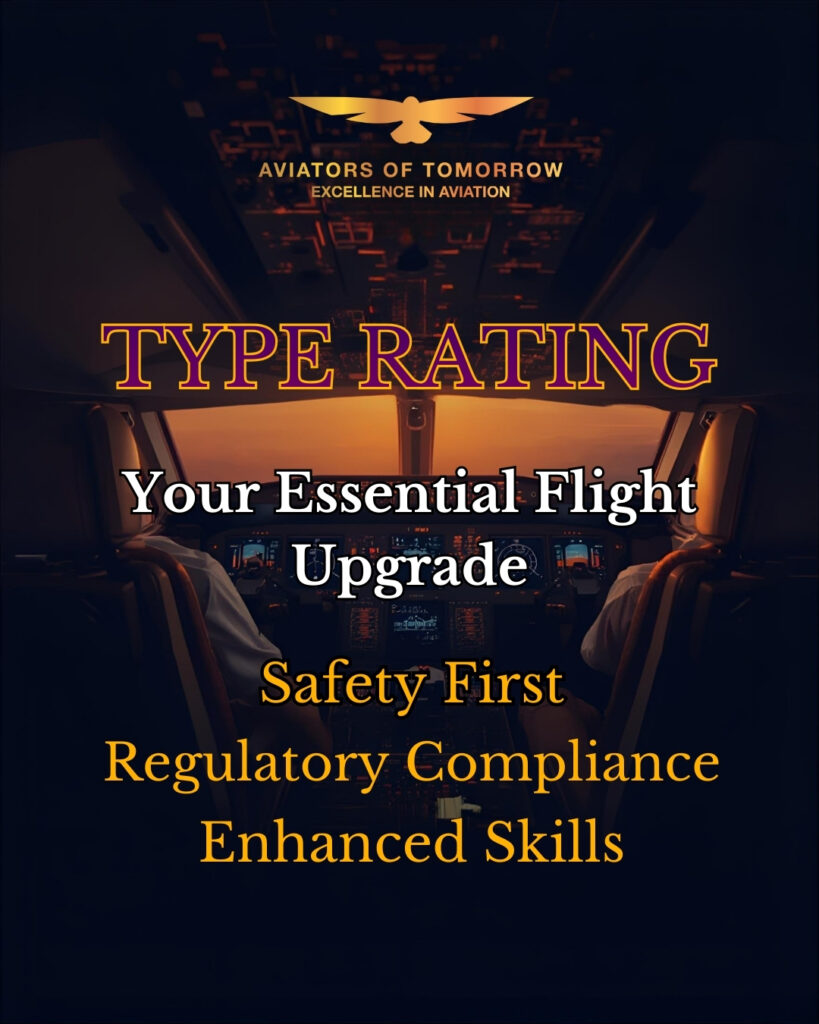
Table of Contents
🧭 What Is a Type Rating?
In simple terms, Type Rating is an authorisation added to a pilot’s license that qualifies them to fly a particular aircraft model. Each aircraft type, whether it’s an A320, B737, or any other, has its own complex systems, handling characteristics and performance limitations.
Basic pilot training teaches the fundamentals of flight and aircraft control, but it takes pilots a step further by focusing on aircraft-specific knowledge. Without this qualification, a pilot cannot legally operate that aircraft type.
According to the International Civil Aviation Organisation (ICAO) and national aviation authorities like India’s DGCA (Directorate General of Civil Aviation), it is mandatory for aircraft that require specific training due to their complexity or performance characteristics.
⚙️ Why Type Rating Is Important
Aircraft-Specific Expertise
Every aircraft model has unique flight control systems, engine configurations and cockpit designs. Through the training, pilots gain the technical knowledge and practical skills required to manage these systems effectively and safely.
Enhanced Operational Safety
Type Rating programs include simulator sessions that replicate real-life flight conditions and emergency scenarios. Pilots learn how to handle complex situations, such as engine failures, hydraulic malfunctions and adverse weather, which improves decision-making and safety.
Transition to Airline Operations
Airlines expect pilots to be ready to operate their fleet types. Having a Type Rating makes it easier to transition from flight training to professional operations, as it aligns pilot capabilities with industry requirements.
Career Readiness
Completing a Type Rating training gives pilots a competitive edge in airline recruitment processes. It demonstrates advanced technical competence and readiness to join flight operations quickly.
📚 Structure of Type Rating Training
The training typically consists of three major phases: theoretical instruction, simulator training and aircraft-based training.
1. Ground School (Theory Phase)
- Covers aircraft systems such as hydraulics, flight controls, avionics and engine management.
- Includes study of normal and emergency procedures, performance data and operational limitations.
- Usually delivered through classroom lectures and computer-based training modules.
The theory phase ensures that pilots understand every part of the aircraft, from the flight deck layout to the smallest system indication on the overhead panel.
2. Simulator Training
- Conducted in a Full Flight Simulator (FFS), which replicates the exact cockpit, sounds and motion of the aircraft.
- Focuses on both normal and abnormal operations, including takeoffs, landings and in-flight emergencies.
- Trainees are evaluated on their decision-making, crew coordination and technical handling.
Simulator training is considered the most intensive part of Type Rating, as it prepares pilots to manage real-world airline operations in a controlled environment.
3. Base Training (Aircraft Flight)
- Involves performing a minimum number of takeoffs and landings in the actual aircraft under supervision.
- Completes the training process and validates a pilot’s hands-on skills.
After successful completion, the aviation authority endorses the specific aircraft type on the pilot’s license.
Dreaming of flying the A320, B737, or ATR soon? Get personalised guidance on choosing the right Type Rating, understanding training costs, eligibility, and career pathways. Our aviation experts will help you plan your next steps with clarity and confidence.
Fill out the form below to get started.
Stand a chance to win 100% scholarship & start training with India’s trusted aviation institute. Apply & Check Eligibility.
Apply Now!🧑✈️ Eligibility Criteria for Type Rating
Before starting the training, pilots must meet specific requirements set by aviation authorities:
- Valid Commercial Pilot License (CPL) with Instrument Rating (IR) and Multi-Engine Rating (MER).
- Valid Class 2 and Class 1 Medical Certificate.
- Proficiency in English (ICAO Level 4 or above).
These prerequisites ensure that pilots have a solid foundation of flying skills and theoretical knowledge before advancing to it.
✈️ Common Aircraft Types for Type Rating
The choice of aircraft for the training depends largely on industry demand, airline fleet trends and personal career goals. Some of the most common options include:
- Airbus A320 Type Rating: The most popular choice worldwide due to its widespread use among low-cost and full-service carriers.
- Boeing 737 Type Rating: Ideal for pilots aiming to work with airlines operating Boeing fleets.
- ATR 72 Type Rating: Common for pilots targeting regional airlines and short-haul operations.
Choosing the right training can shape the direction of a pilot’s career and increase job opportunities with specific airline operators.
If you want to know more about the different types of aircraft used in flight training you may read our blog “Different Types of Aircraft Used in Flight Training“
💡 Skills Developed During Type Rating
Beyond technical knowledge, the training helps pilots refine several key skills essential for airline operations:
- Crew Resource Management (CRM): Effective teamwork and communication in a multi-crew cockpit.
- Decision-Making Under Pressure: Handling in-flight challenges with calm judgment.
- Technical Proficiency: Managing complex systems and flight computers.
- Standard Operating Procedures (SOPs): Following structured workflows to maintain consistency and safety.
- Workload Management: Balancing multiple tasks while maintaining situational awareness.
These competencies prepare pilots not just for type-specific flying but for the professional standards expected in modern commercial aviation.
🌤️ The Cost and Duration of Type Rating
The cost of the training varies based on aircraft type, training location and facilities. On average, Type Rating for narrow-body jets like the Airbus A320 or Boeing 737 ranges between ₹10–25 lakhs in India.
The training duration typically spans 4 to 8 weeks, depending on scheduling and the student’s progress. Some programs may extend further if additional simulator sessions or base training flights are required.
While it represents a significant financial investment, it is a crucial step toward employment in the airline industry and long-term career growth.
🧩 Challenges Faced During Type Rating
- High Learning Intensity: The training demands deep focus and consistent study.
- Simulator Pressure: Realistic emergency scenarios can be stressful but are vital for skill development.
- Adaptation to Multi-Crew Operations: Pilots must shift from solo flying to cooperative teamwork.
Overcoming these challenges builds confidence, precision and professionalism, qualities that define successful airline pilots.
🚀 The Path After Type Rating
Once a pilot earns a Type Rating, they become eligible for airline recruitment drives and line training on the specific aircraft type. During line training, pilots gain real-world flight experience under the supervision of airline training captains.
It not only enhances employability but also demonstrates readiness for the operational and safety responsibilities of a commercial cockpit. It’s the point where theory, simulator experience and real-world flying come together.
🛫 Conclusion
A Type Rating is more than just an additional certification; it’s a professional transformation. It bridges the gap between flight training and real-world airline operations, ensuring that pilots are competent, confident and compliant with global aviation standards.
For aspiring aviators, understanding and completing it marks the true beginning of an airline career. It demands commitment, discipline and technical excellence, but it also rewards pilots with the skills to command some of the most advanced aircraft in the world.Whether it’s the Airbus A320, Boeing 737, or ATR 72, it is the key that unlocks the cockpit doors of modern aviation
Ready for your Type Rating journey?
Complete the form to begin.
Stand a chance to win 100% scholarship & start training with India’s trusted aviation institute. Apply & Check Eligibility.
Apply Now!