For many students, the idea of becoming a pilot starts much earlier than career planning. Sometimes it begins while watching an aircraft disappear into the clouds. Sometimes it happens during a flight, seeing pilots inside the cockpit and wondering what that life feels like.
And then, after 10th class, one question starts becoming important:
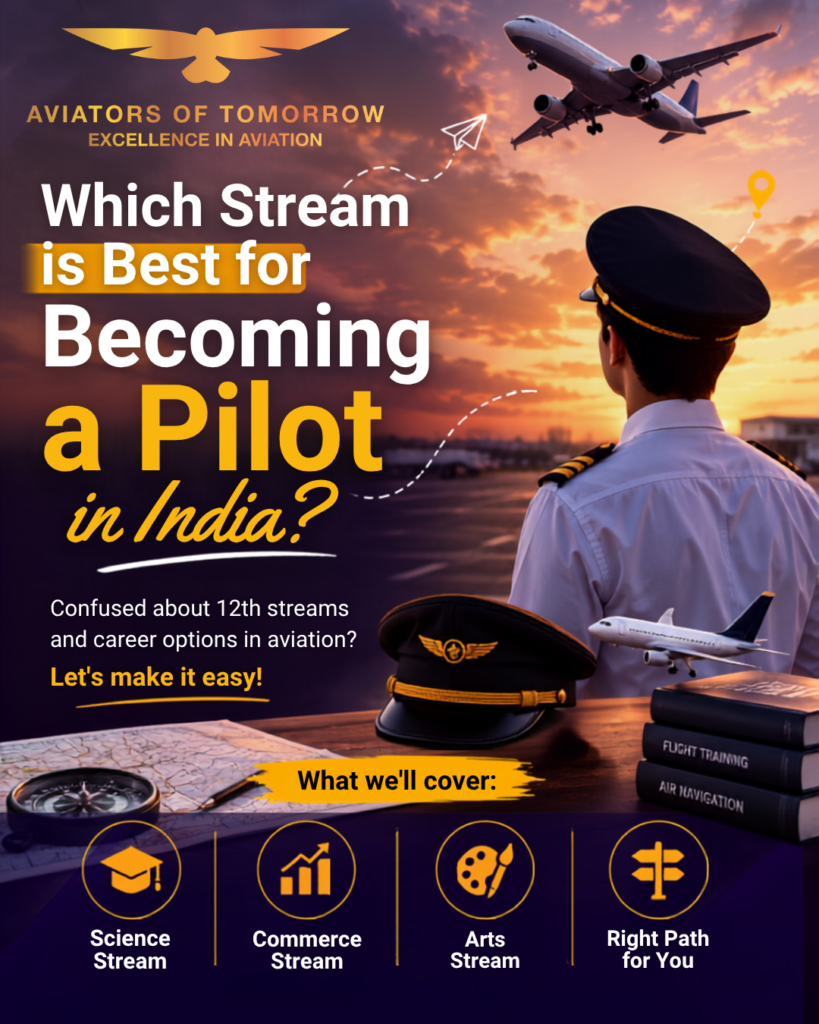
Table of Contents
Which stream should you choose to become a pilot in India?
It’s one of the most common questions students ask while planning a future in aviation. Some students think only Science students can become pilots. Others feel confused between PCM, Commerce, or Arts. Parents also want clarity before making an academic decision.
The truth is, the path becomes much simpler once you understand how aviation training actually works.
In this guide, we’ll explain:
- Which stream is best for pilots
- Whether Commerce or Arts students can enter aviation
- which subjects matter most
- What happens after 12th
- How students can start preparing confidently for a professional aviation career.
Which Stream is Best for Becoming a Pilot in India?
For students planning a pilot career in India, the most recommended option is:
Science stream with Physics and Mathematics
This stream matches the eligibility requirements for Commercial Pilot License (CPL) training in India and helps students prepare more comfortably for aviation studies later on.
Most aviation training pathways and DGCA-related requirements include Physics and Mathematics in the 12th class. That’s why students interested in aviation usually prefer PCM after 10th.
Choosing the right stream early also gives students more confidence when they begin aviation theory classes, simulator training and practical flying sessions in the future.
Why Do Most Students Choose Science for Aviation?
Aviation is a professional field that combines:
- technology
- communication
- discipline
- responsibility
- and decision-making
During pilot training, students learn about aircraft systems, navigation, weather conditions, radio communication and flight planning. Subjects like Physics and Mathematics support these concepts naturally.
But this doesn’t mean students need to be “perfect” in every subject before entering aviation.
Many aspiring pilots begin with the same confusion students have after 10th class. With the right guidance and consistent learning, students gradually become more comfortable with aviation concepts during training.
Take the first step toward your pilot career with the right guidance and training.
Stand a chance to win 100% scholarship & start training with India’s trusted aviation institute. Apply & Check Eligibility.
Apply Now!Which Subjects Matter Most for Pilot Training?
Some school subjects become especially useful while preparing for aviation.
Physics
Physics helps students understand how aircraft fly, how speed and altitude work and how aviation systems operate during flight.
These concepts later connect directly with flight training and ground school studies.
Mathematics
Maths is useful in navigation, calculations, fuel planning, timing and operational aviation procedures.
Students often imagine aviation Maths to be extremely difficult, but most training focuses on practical understanding and regular application.
English
English communication is an important part of aviation worldwide.
Pilots communicate with instructors, crew members and air traffic controllers in English, which is why communication skills become valuable throughout aviation training.
Can Commerce Students Become Pilots in India?
Yes, absolutely.
Commerce students can also pursue pilot training in India.
If Physics and Mathematics were not part of their 12th subjects, students may need to complete these requirements separately before applying for CPL training.
Every year, students from different educational backgrounds successfully enter aviation training programs. What matters most is proper preparation, clarity about the training pathway and professional guidance.
Can Arts Students Build a Career in Aviation?
Yes, Arts students can also move toward aviation careers.
Just like Commerce students, they may need to complete Physics and Mathematics separately if those subjects were not included during school education.
However, students who already know they want to become pilots often choose Science after 10th because it creates a smoother path toward aviation eligibility and training preparation.
What Does the Pilot Training Journey Look Like After 12th?
For many students, aviation starts feeling real the moment they enter a simulator room for the first time.
The journey after school usually follows a structured training process.
Step 1: Complete 12th Class
Students generally complete 12th with Physics and Mathematics.
Step 2: DGCA Medical Assessment
Aspiring pilots must meet DGCA medical fitness standards before beginning professional flight training.
Step 3: Begin Aviation Ground Training
Students start learning:
- navigation
- aviation meteorology
- air regulations
- radio communication
- aircraft technical knowledge
This stage introduces students to the professional side of aviation step by step.
Step 4: Simulator and Flight Training
From simulator sessions to sitting inside a training aircraft for the first time, students gradually begin understanding real cockpit procedures and aviation operations.
Pre-flight briefings, instructor guidance, radio calls and practical flying sessions become part of everyday training life.
For many aspiring pilots, this is the stage where aviation changes from a dream into a professional goal they can truly visualize.
Step 5: Earn a Commercial Pilot License (CPL)
After completing required exams, training and flying hours, students receive their Commercial Pilot License and move closer toward airline opportunities.
Why Early Aviation Guidance Matters
One thing many students realise later is how helpful early aviation guidance can be.
Understanding:
- stream selection
- DGCA requirements
- pilot training pathways
- aviation communication
- simulator exposure
- airline preparation
helps students make more confident academic and career decisions from the beginning.
Aviation is a highly professional industry and students who understand the process early often feel more focused while planning their future.
That’s one reason many aspiring pilots start exploring aviation guidance soon after the 10th grade.
What Makes Aviation Such an Inspiring Career?
Very few careers combine professionalism, travel, technology, responsibility and global opportunities the way aviation does.
The environment itself feels unique.
Airports operate around the clock. Simulator rooms designed like real cockpits. Training aircraft lined up on the runway. Professional communication inside aviation environments.
Students entering this field often discover that aviation is not only about flying aircraft, it’s also about discipline, confidence, teamwork and continuous learning.
And that’s exactly what attracts so many young students toward flying careers every year.
Skills That Help Students Succeed in Aviation
Pilot training helps students develop strong professional qualities over time.
Communication Skills
Clear communication is an important part of aviation operations and teamwork.
Confidence and Discipline
Pilots are trained to remain calm, professional and focused in different situations.
Situational Awareness
During training, students gradually learn how to observe, analyse and make informed decisions inside aviation environments.
Professional Responsibility
Aviation places strong importance on consistency, responsibility and professional standards throughout training.
Can Students from Different Backgrounds Become Pilots?
Absolutely.
Some students decide they want to become pilots very early. Others discover their interest in aviation later during school or college.
Both situations are completely normal.
Every year, students from different educational backgrounds successfully begin aviation training and move toward professional flying careers.
With proper preparation, structured learning and the right training environment, students can confidently build the knowledge and practical skills needed for aviation.
Choosing the Right Aviation Training Environment
Selecting the right aviation training environment is an important step for aspiring pilots.
Students should always look for:
- proper aviation guidance
- structured training support
- experienced mentorship
- DGCA-focused preparation
- professional learning environments
A strong training foundation helps students understand aviation pathways more clearly while preparing confidently for future opportunities in the aviation industry.
Career Opportunities After Becoming a Pilot
Aviation offers multiple career opportunities for trained pilots.
Commercial Pilot
Fly passenger aircraft for domestic and international airlines.
Cargo Pilot
Operate cargo and logistics aircraft.
Charter and Private Aviation Pilot
Fly private and business aircraft.
Flight Instructor
Train future pilots at aviation academies and training centres.
Airline Captain
Experienced pilots can progress toward senior command positions within airlines over time.
As aviation continues growing in India and internationally, professional opportunities within the industry continue expanding as well.
Frequently Asked Questions
Can I become a pilot after Commerce?
Yes, Commerce students can become pilots after completing the required Physics and Mathematics eligibility requirements.
Is PCM compulsory for pilots in India?
Physics and Mathematics are generally required for Commercial Pilot License training in India.
Can girls become pilots in India?
Absolutely. Aviation offers excellent career opportunities for both male and female students interested in professional flying careers.
What is the minimum age for pilot training?
Students can begin pilot training after meeting the required educational and medical eligibility criteria.
How long does CPL training take?
Commercial Pilot License training generally takes around 18 months to 3 years, depending on training progression and flying schedules.
You May Read Our Blog “DGCA Class 2 Medical Tests List Explained Complete 2026 Guide“
Final Thoughts
Every professional pilot once started exactly where many students are today, trying to understand the right path after school and exploring how aviation training works.
For students planning a future in aviation, choosing the right stream is one of the first important steps.
For most aspiring pilots in India, the most recommended option is:
Science stream with Physics and Mathematics
It supports aviation eligibility requirements, helps students prepare more comfortably for pilot training and creates a stronger academic foundation for future aviation studies.
Most importantly, aviation is a field built on learning, professionalism, confidence and continuous growth.
With the right guidance, structured training and dedication, students can gradually transform their interest in flying into a professional future in aviation, from classroom learning and simulator sessions to one day operating aircraft professionally above the clouds.
Start your aviation journey today and turn your dream of becoming a pilot into reality.
Stand a chance to win 100% scholarship & start training with India’s trusted aviation institute. Apply & Check Eligibility.
Apply Now!