Modern aviation is no longer defined only by the ability to control an aircraft manually. Today’s cockpit is a sophisticated environment where technology and human skill work together to ensure safety, efficiency and precision. One of the most important systems that student pilots must understand early in their journey is the flight management system in pilot training. From navigation and fuel planning to autopilot integration and route optimisation, this system plays a central role in how modern aircraft operate.
For aspiring pilots beginning their journey, gaining a clear understanding of the flight management system in pilot training is essential. Before stepping into airline cockpits, student pilots are introduced to this advanced avionics system during ground school and simulator sessions. Learning how the system functions helps students build situational awareness, improve decision-making and adapt to modern aviation technology. This blog explores what the system is, how it works, why it is important in training and how early awareness can shape a confident aviation career.
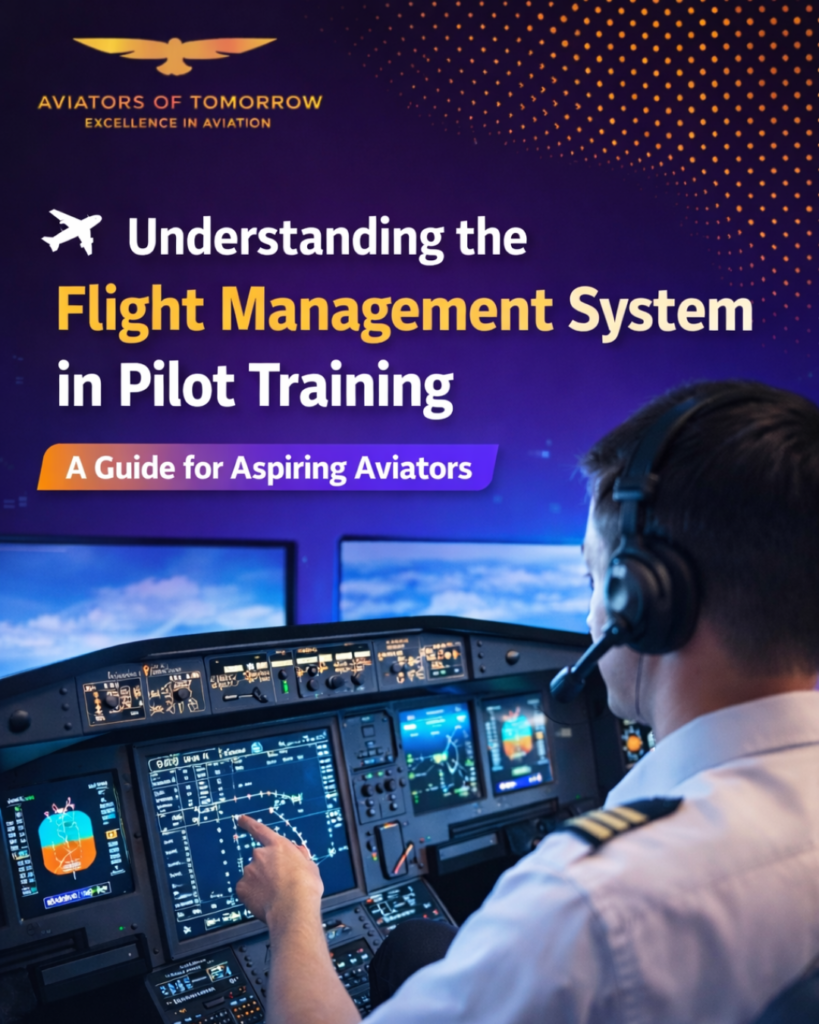
Table of Contents
The Evolution of Modern Cockpit Technology
Over the past few decades, aviation has evolved significantly. Traditional analogue instruments have gradually been replaced by digital avionics and integrated navigation systems. Modern aircraft now rely on intelligent computers to support pilots with navigation, fuel calculations and flight planning. Among these technological advancements, the flight management computer has become one of the most essential tools in airline operations.
In earlier times, pilots relied heavily on manual calculations and radio navigation aids. Today, cockpit systems integrate multiple data sources and automate complex tasks. This evolution does not reduce the pilot’s responsibility; rather, it requires pilots to understand technology deeply and manage it effectively. That is why exposure to cockpit systems begins during early training stages, allowing students to become comfortable with automation and modern procedures.
What Is a Flight Management System?
A flight management system is an onboard computer that assists pilots in planning and managing a flight from departure to arrival. It integrates navigation, performance data, fuel calculations and autopilot guidance into one central interface. By entering route details, altitude, speed and waypoints, pilots can allow the aircraft to follow a programmed path while they monitor and manage the flight.
The system communicates with various aircraft components such as navigation displays, autopilot systems and engine instruments. While the system automates many functions, pilots remain responsible for monitoring performance and making decisions when conditions change. Understanding this balance between automation and manual control is a key part of professional pilot training.
Why Student Pilots Learn This System Early
Many aspiring aviators assume that advanced avionics are only relevant for airline pilots. In reality, early exposure helps students transition smoothly from basic training to complex aircraft operations. During the initial phases of pilot education, students focus on fundamental flying skills. As they progress, they begin to understand navigation systems, instrument procedures and automation management.
Learning the flight management system in pilot training allows students to:
- Understand modern cockpit workflow
- Develop structured decision-making habits
- Improve accuracy in navigation
- Reduce workload during complex phases of flight
- Prepare for airline-style operations
By familiarising themselves with cockpit technology early, students gain confidence and clarity about how modern aircraft function.
How the System Works in Simple Terms
Before a flight begins, pilots input essential data into the system. This typically includes the departure airport, destination, route waypoints, cruising altitude and expected fuel consumption. Once this information is entered, the system calculates the optimal flight path and guides the journey.
During the flight, the system displays navigation information on cockpit screens. It can also connect with the autopilot, allowing the aircraft to follow the programmed route automatically. Pilots monitor the system continuously, making adjustments when weather, air traffic or operational requirements change. This combination of automation and human oversight ensures both efficiency and safety.
Role of Simulator Training in Learning Cockpit Systems
Flight simulators play a crucial role in helping students understand cockpit technology. In a simulated environment, trainees can practise entering flight plans, adjusting routes and managing automation without real-world pressure. This controlled setting allows them to make mistakes, learn from them and build confidence.
During simulator sessions, instructors guide students through realistic scenarios. They learn how to programme routes, respond to unexpected changes and manage workload during different phases of flight. Exposure to such systems prepares students for real aircraft operations and helps them develop professional discipline.
Simulators also allow trainees to practise decision-making and communication. Understanding automation does not mean relying on it blindly; instead, pilots learn to monitor systems and intervene when necessary. This balanced approach forms the foundation of safe aviation practices.
Importance of Situational Awareness
While automation simplifies many tasks, situational awareness remains essential. Pilots must always understand their aircraft’s position, speed, altitude and surrounding environment. The system provides data, but it is the pilot who interprets and acts upon it.
Developing situational awareness requires training, discipline and continuous practice. Students learn to cross-check information, verify system inputs and remain alert to changing conditions. By combining technological knowledge with strong awareness, pilots maintain control and ensure safety.
Building Professional Habits During Training
Understanding cockpit systems is not only about operating technology; it also builds professional habits. Students learn to follow checklists, verify data entries and communicate effectively with instructors and crew members. These habits become second nature over time and contribute to smooth operations in real-world flying.
Training also emphasises workload management. During critical phases such as takeoff and landing, pilots must balance multiple tasks simultaneously. Familiarity with cockpit systems reduces confusion and helps students manage responsibilities efficiently.
Transition from Training to Airline Operations
As students progress in their aviation journey, they move from basic training aircraft to more advanced systems. Exposure to automation during training ensures that this transition is smooth. By the time they enter airline environments, they are already comfortable with navigation computers, autopilot systems and digital displays.
Airlines expect pilots to manage automation responsibly. Understanding how systems function and how to intervene when required is essential. Early awareness during training helps students meet these expectations and adapt quickly to professional roles.
Why Early Guidance Matters
For many aspiring pilots, the aviation journey begins with curiosity and ambition. However, without proper guidance, students may focus only on flying hours and overlook the importance of systems knowledge. Understanding the flight management system in pilot training ensures that students approach aviation holistically.
Guidance before training helps students understand what to expect in modern cockpits. It also prepares them mentally for the discipline and responsibility required in aviation. By learning about systems, procedures and technology early, students develop confidence and clarity in their career path.
Do You Want to Become a Pilot?
Understanding cockpit systems like navigation, automation and flight management is part of modern pilot training.
👉 Join DGCA Ground Classes
Stand a chance to win 100% scholarship & start training with India’s trusted aviation institute. Apply & Check Eligibility.
Apply Now!Connecting Technology and Human Skill
Aviation remains a human-centred profession. Technology supports pilots, but it does not replace judgment or responsibility. The relationship between automation and human skill is one of balance. Pilots must trust systems while also verifying information and remaining prepared to take manual control when needed.
Training programmes emphasise this balance. Students learn that automation is a tool designed to enhance safety and efficiency. Understanding how to use it correctly is an essential part of becoming a professional aviator.
Preparing for the Future of Aviation
The aviation industry continues to evolve with new technologies and innovations. Future cockpits may include even more advanced automation and data integration. Students entering aviation today must be prepared for this dynamic environment. By understanding systems early, they position themselves for long-term success.
Learning about cockpit technology also inspires curiosity. Students begin to see aviation not only as a career but as a field of continuous learning. This mindset helps them stay adaptable and prepared for future developments.
You may read our blog “Understanding METAR and TAF: Essential Weather Reports for Every Aspiring Pilot“
Conclusion
The journey to becoming a professional pilot involves much more than learning to control an aircraft. It requires understanding technology, developing discipline, and building strong decision-making skills. The flight management system in pilot training represents a vital part of this journey, helping students transition from basic flying to modern cockpit operations.
By gaining early awareness of cockpit systems, aspiring aviators build confidence and clarity. They learn how technology supports safe and efficient flight while maintaining responsibility as pilots. In India, aviation training and safety standards are regulated by the Directorate General of Civil Aviation (DGCA), which ensures that pilot training programs follow strict guidelines and modern aviation practices.
As aviation continues to advance, understanding these systems will remain essential for every future professional in the cockpit. With regulatory support from authorities like the Directorate General of Civil Aviation, aspiring pilots can develop the technical knowledge and operational discipline needed for a successful aviation career.
Aviation is not simply about reaching a destination; it is about preparing for every stage of the journey with knowledge, awareness, and adherence to the standards that keep the skies safe.
Start Your Pilot Training Journey
Modern cockpits rely on advanced systems and automation. Learning these concepts begins with strong DGCA subject preparation.
👉 Join Our DGCA Ground Classes
Stand a chance to win 100% scholarship & start training with India’s trusted aviation institute. Apply & Check Eligibility.
Apply Now!