The Air Cycle Machine (ACM) is one of the most critical yet underappreciated components in modern aircraft design. As Aviators of Tomorrow continues to evolve, understanding the role of the ACM in aircraft environmental control becomes essential for engineers, pilots and aviation enthusiasts alike.
At its core, the Air Cycle Machine is a mechanical device that conditions bleed air taken from the aircraft’s engines or auxiliary power unit, transforming it into breathable, temperature-regulated cabin air. Without this remarkable piece of engineering, passenger comfort and crew safety at high altitude would simply not be possible.
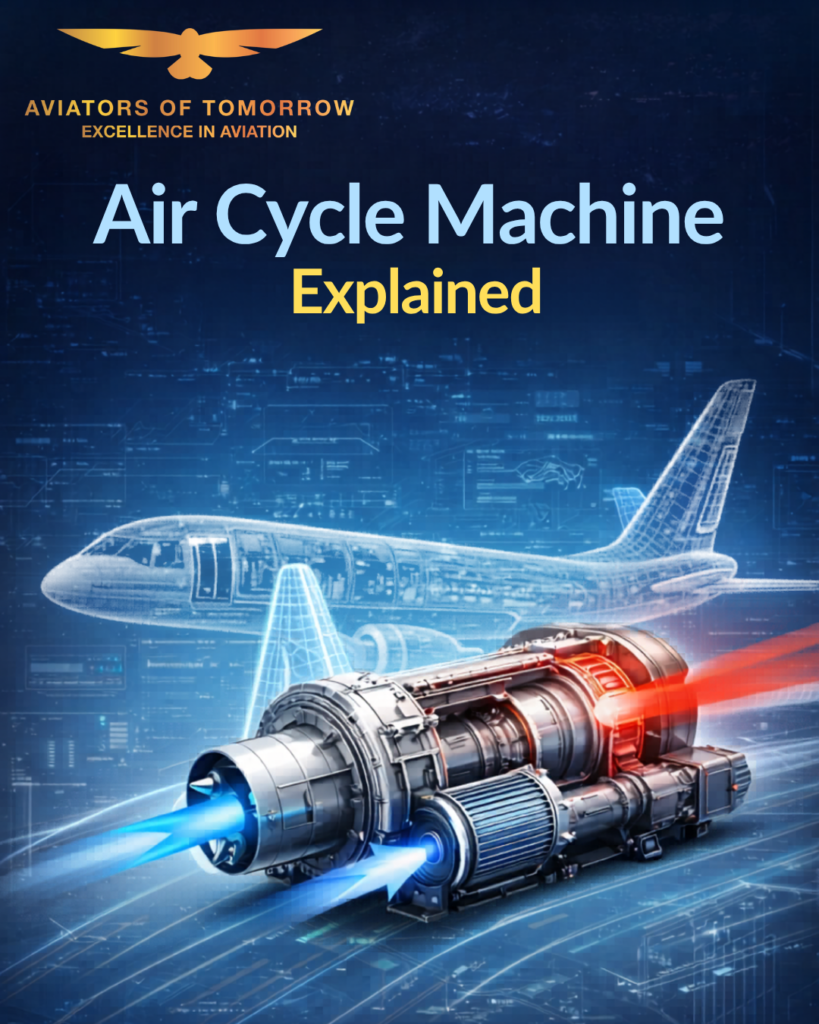
Table of Contents
How the Air Cycle Machine Works in Aircraft Environmental Control Systems
The aircraft environmental control system (ECS) relies heavily on the ACM to maintain optimal cabin pressure and temperature. Bleed air is first extracted from the jet engine compressor at high temperature and pressure. This hot, high-pressure air then passes through a series of heat exchangers before the ACM compresses and expands it rapidly, causing a significant temperature drop. The conditioned air is finally distributed throughout the aircraft cabin, making every breath on board possible.
This thermodynamic process is known as the bootstrap air cycle and it forms the foundation of virtually every commercial and military aircraft ECS in operation today. It is elegant in its simplicity yet remarkable in its precision.
Key Components of the Air Cycle Machine
Understanding the ACM means understanding its core components, each of which plays a vital role in aircraft pneumatic systems and overall cabin air quality.
The compressor increases the pressure of incoming bleed air, preparing it for the expansion phase. The turbine then drives that expansion, causing air temperature to drop dramatically, often below freezing, before mixing occurs. Working alongside these two elements, the integrated fan assists with ram air circulation through heat exchangers, improving overall system efficiency. Finally, modern ACMs use air foil bearings, which eliminate the need for lubrication entirely and significantly reduce maintenance requirements over the aircraft’s service life.
The Role of the ACM in Aviators of Tomorrow
As the aviation industry pushes towards greener, more efficient aircraft, the future of aircraft cabin pressurisation and thermal management depends on advanced ACM technology. Next-generation aircraft are being designed with smarter bleed air management systems that reduce engine performance losses and the ACM sits at the centre of this efficiency drive.
The shift towards more electric aircraft (MEA) architecture is also driving the development of electrically driven ACMs. These systems remove dependence on engine bleed air entirely, reducing fuel burn and emissions, a cornerstone of sustainable aviation. Alongside this, the use of composite materials in aerospace is enabling lighter, more durable ACM components, where reduced weight directly translates to better fuel efficiency and a lower carbon footprint.
Air Cycle Machine vs Vapour Cycle System
In the world of aircraft cooling systems, two primary technologies compete for application. The Air Cycle Machine uses air as its working fluid and is significantly lighter, making it the preferred choice for commercial and military aviation. It performs exceptionally well at cruising altitude and demands lower maintenance over time.
The Vapour Cycle System, by contrast, uses a refrigerant as its working fluid. It is heavier and requires more maintenance, though it finds application in smaller aircraft and ground support vehicles. When it comes to aircraft ECS efficiency at altitude, the ACM wins decisively thanks to its reliability, weight advantage and consistent thermal performance in demanding flight conditions.
Ready to explore the systems that keep aircraft running? Dive deeper into aviation with us.
Stand a chance to win 100% scholarship & start training with India’s trusted aviation institute. Apply & Check Eligibility.
Apply Now!ACM Maintenance and Reliability in Commercial Aviation
Aircraft ECS maintenance is a critical aspect of airline operations and the Air Cycle Machine is designed for long service intervals. Regular inspection remains essential, covering turbine blade condition for erosion or foreign object damage, monitoring of bearing performance in air foil bearing systems, water separator function checks to prevent ice formation in aircraft bleed air cooling and pressure and temperature output verification during scheduled maintenance visits.
Airlines depend heavily on ACM reliability because a failure at altitude can compromise cabin air circulation and passenger safety. For this reason, redundancy is built into most aircraft systems, with dual pack configurations ensuring continued operation even when one unit is degraded or offline.
The ACM’s Contribution to Cabin Air Quality
One area that passengers rarely consider is how the aircraft cabin ventilation system directly impacts their health and in-flight comfort. The ACM supplies fresh conditioned air continuously throughout every flight while working alongside HEPA filtration systems to remove airborne contaminants. It regulates cabin humidity levels to reduce passenger fatigue on long-haul routes and maintains pressurisation equivalent to an altitude of approximately 6,000 to 8,000 feet, directly supporting passenger well-being throughout the journey.
Modern aircraft such as the Boeing 787 Dreamliner and Airbus A350 have refined their aircraft pressurisation technology to deliver noticeably better air quality, partly through significantly improved ACM designs at the heart of their environmental control systems.
ACM in Military Aviation
The Air Cycle Machine is not exclusive to commercial operations. In military aircraft thermal management, the ACM plays an equally vital role across fighter jets, transport aircraft and surveillance platforms. These systems cool avionics equipment that generates significant heat during operation, protect pilots from extreme temperature variations at high altitude and maintain performance in high-performance aircraft ECS environments where absolute reliability is non-negotiable.
Innovations Driving the Future of the Air Cycle Machine
The engineering community is actively developing the next generation of ACM technology across several exciting fronts.
Integration of IoT-based aircraft health monitoring now allows real-time ACM performance tracking, where predictive maintenance systems can identify wear before it becomes a fault, reducing costly unscheduled downtime for operators. Additive manufacturing is enabling precision-engineered turbine components with geometries previously impossible to produce through conventional methods, improving aerodynamic efficiency within the ACM itself.
Perhaps most significantly, aircraft like the Boeing 787 pioneered no-bleed air systems using electrically driven compressors and this approach is now influencing the design of future ACMs built specifically for electric and hybrid propulsion platforms across the Aviators of Tomorrow.
Why the Air Cycle Machine Is Central to Sustainable Aviation
Sustainability is the defining challenge of modern aerospace engineering and the ACM contributes to this goal in several meaningful ways. Reduced bleed air extraction lowers engine fuel consumption, while lighter ACM designs improve aircraft payload efficiency across every route flown. Longer service intervals reduce the environmental cost of maintenance operations and electric ACM variants actively support the broader industry transition to zero-emission aviation technology.
As the industry works towards net-zero targets, every kilogram saved and every watt of power recovered genuinely matters. The ACM is quietly but powerfully central to that effort and its importance will only grow as aircraft designs become more ambitious.
You May Read Our Blog “ATPL or CPL: Understanding the Difference for Aspiring Pilots in India“
Final Thoughts: The Air Cycle Machine and the Aviators of Tomorrow
The Air Cycle Machine (ACM) may not be visible to passengers, but its role in safe, comfortable and efficient air travel is vital. As aviation moves toward sustainability and smarter systems, guided by the Directorate General of Civil Aviation, the ACM continues to evolve becoming lighter, smarter and more efficient.
Want to become a pilot or aviation expert? Start learning the technology behind every aircraft.
Stand a chance to win 100% scholarship & start training with India’s trusted aviation institute. Apply & Check Eligibility.
Apply Now!