The flare technique aircraft pilots use during landing is one of the most critical skills in all of aviation. Whether you are a student pilot taking your first solo or an experienced aviator refining your approach, mastering the landing flare maneuver separates a safe touchdown from a dangerous one. This guide is crafted specifically for the aviators of tomorrow those who dream of crisp, confident landings every single time.
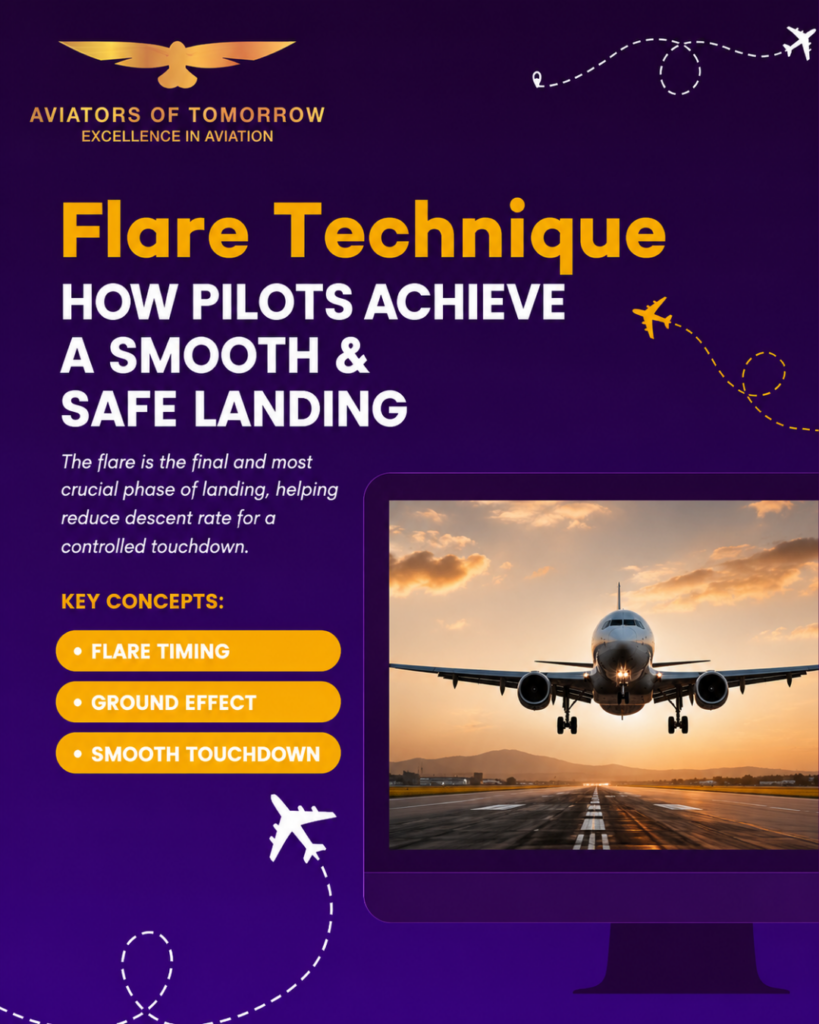
Table of Contents
Understanding the Aircraft Landing Flare
The landing flare is the final phase of an aircraft approach where the pilot transitions from a descending glidepath to a near horizontal attitude just above the runway. During this phase, the pilot gently raises the nose of the aircraft to reduce the rate of descent, allowing the main wheels to contact the runway smoothly.
Without a proper flare manoeuvre, the aircraft risks landing too hard, bouncing or floating excessively down the runway. It is the moment where aerodynamics, timing and pilot instinct all come together.
The Science Behind the Flare Manoeuvre
To understand the aircraft flare procedure, one must appreciate what is happening aerodynamically. As the aircraft descends on final approach, it carries energy both kinetic and potential. The flare converts that descent energy into a controlled, gentle deceleration.
Key aerodynamic factors involved include:
- Ground effect — As the aircraft nears the runway, lift increases due to compressed airflow between the wings and the surface. This is known as ground effect landing and it plays a major role in how the aircraft floats before touchdown.
- Angle of attack — Increasing the pitch attitude during the flare raises the angle of attack, generating more lift momentarily to cushion the descent.
- Airspeed decay — As the throttle is reduced to idle, airspeed begins to bleed off. The pilot must time the pitch control landing precisely to match the speed decay with the desired touchdown point.
Understanding these principles is the foundation of every great pilot landing technique.
Step-by-Step: How to Execute the Flare Technique Aircraft Style
Here is a practical breakdown of the aircraft approach flare process used in general aviation and commercial training:
Step 1 — Stabilised Approach
Before the flare even begins, the approach must be stabilised. Maintain the correct approach speed, glidepath and aircraft configuration. A stable approach makes a good flare far more achievable.
Step 2 — Initiate the Flare at the Correct Height
The flare initiation height varies by aircraft type, but for most light aircraft it begins at approximately 20–30 feet above the runway threshold. At this point, begin a smooth, gradual back pressure on the controls.
Step 3 — Reduce Power Smoothly
As you begin the landing roundout, smoothly reduce throttle to idle. Avoid abrupt power changes, which can destabilise the aircraft attitude.
Step 4 — Hold the Aircraft Off
Use gentle back pressure to hold the aircraft just above the runway surface, allowing the airspeed to decay naturally. This is the art of the flare of patience and feel.
Step 5 — Touchdown
Allow the main wheels to make contact first (in a tricycle gear aircraft). A proper soft touchdown aviation technique sees the aircraft settle gently onto the runway with minimal vertical speed.
Perfect Your Flare. Fly with Confidence.
Stand a chance to win 100% scholarship & start training with India’s trusted aviation institute. Apply & Check Eligibility.
Apply Now!Common Flare Mistakes and How to Avoid Them
Even experienced pilots encounter flare challenges. Here are the most common errors in flare technique aircraft execution:
Flaring Too High Initiating the flare too early causes the aircraft to stall above the runway, resulting in a heavy landing. Always use visual reference to judge the correct flare height.
Flaring Too Late A late flare means the aircraft descends too steeply onto the runway. This can result in nose gear contact first or an excessively firm landing.
Ballooning Applying too much back pressure too quickly causes the aircraft to climb back up in a condition known as ballooning on landing. If this occurs, apply a small amount of power and gently lower the nose to re-establish the descent.
Floating Too Far Down the Runway Carrying excess airspeed into the flare causes the aircraft to float during landing, using up valuable runway length. Always fly the correct approach speed.
The Role of Visual Cues in the Flare
Successful flare technique aircraft execution relies heavily on visual reference. Student pilots often fixate on the instruments during approach, but the flare demands you look outside specifically down the runway ahead.
A useful technique is the runway perspective method: as you descend, the visual perspective of the runway narrows. When the runway edges begin to appear to spread apart slightly in your peripheral vision, you are entering the flare zone. This visual cue, combined with a sense of height above the runway, is what experienced pilots use instinctively.
Differences in Flare Technique Across Aircraft Types
The flare technique aircraft requires will vary depending on the aircraft category:
Light Aircraft (Cessna, Piper) Light aircraft are highly sensitive to back pressure. Small inputs go a long way. The flare is gentle and relatively brief.
High-Wing vs Low-Wing Aircraft High-wing aircraft benefit from increased ground effect due to wing proximity to the ground. Low-wing aircraft may have a slightly different float characteristic.
Complex and High-Performance Aircraft These require more precise energy management. The aircraft energy management landing concept becomes increasingly important you must account for higher speeds, greater momentum and less forgiving runway margins.
Tailwheel Aircraft The tailwheel landing technique demands a three-point or wheel landing where the main wheels touch first in a nose-high attitude. The flare is more pronounced and timing is absolutely critical.
Training Tips for Student Pilots
If you are working on your pilot landing technique and struggling with the flare, here are several training approaches that work:
Touch-and-Go Landings Repetition is everything. Touch-and-go practice allows you to accumulate multiple landings in a single training session, building muscle memory and visual familiarity.
Instructor Demonstrations Ask your flight instructor to demonstrate a landing while narrating each stage. Hearing the thought process behind each input during the landing roundout phase is enormously helpful.
Simulator Practice Modern flight simulator landing training tools recreate runway perspectives with impressive accuracy. Use simulators to practice flare timing without pressure.
Mental Visualisation Before each flight, mentally rehearse the aircraft approach flare. Visualise the height, the back pressure, the power reduction and the touchdown. Many professional pilots swear by pre-flight mental rehearsal.
Weather and Environmental Factors Affecting the Flare
Environmental conditions significantly impact the flare technique aircraft pilots depend on:
Crosswind Landings A crosswind introduces a lateral drift that must be corrected simultaneously with the flare. The crosswind landing technique involves either a crab or wing-low method, both of which require careful coordination to land on the centreline.
Gusty Conditions In gusty wind conditions, carry slightly more airspeed on approach typically half the gust factor added to your normal approach speed. Be prepared for sudden changes in lift during the flare.
Runway Surface A wet or contaminated runway affects braking after touchdown. Plan your touchdown point aviation earlier to allow more runway for deceleration.
Density Altitude At high-altitude airfields, high density altitude landing means the aircraft flies faster at the same indicated airspeed. The flare will feel different, more float and less aerodynamic response.
Why the Flare Technique Matters for Flight Safety
Aviation safety statistics consistently show that runway excursions and hard landings are among the most frequent causes of aircraft damage. The flare technique aircraft mastery directly reduces these risks.
A well-executed flare:
- Minimises vertical descent rate at touchdown
- Reduces structural stress on the undercarriage
- Gives the pilot maximum control during the most critical seconds of flight
- Builds confidence for future operations in challenging conditions
For student pilot training and beyond, the flare is not merely a technical skill, it is a safety habit that must be developed with discipline and care.
You May read Our Blog “GPWS Warning Modes: The Complete Guide“
Final Thoughts on Flare Technique Aircraft
The flare technique aircraft pilots rely upon is both a science and an art. It demands a thorough understanding of aerodynamics, sharp visual awareness, disciplined throttle management and consistent practice. For the aviators of tomorrow, developing a smooth and reliable flare is one of the greatest milestones in flight training and aligns with the high standards of precision, safety and professionalism expected in DGCA-approved pilot training.
Every great landing begins long before the runway threshold. It starts with preparation, understanding and an unwavering commitment to precision. By mastering the flare, aspiring pilots build the confidence and skills needed for safe landings while meeting the disciplined flying practices encouraged throughout DGCA-compliant flight training.
Turn Every Landing into a Confident One.
Stand a chance to win 100% scholarship & start training with India’s trusted aviation institute. Apply & Check Eligibility.
Apply Now!